One of the first things people notice after relocating here is how much time Austin residents spend outside. Not just on weekends — on weekday mornings before work, on lunch breaks, and on slow Tuesday evenings when the light turns golden over the water. The things to do in Austin that stick with people long after the move are almost always outdoors.
Key Insights
- Austin’s outdoor season runs all twelve months, but each season has a distinct rhythm — knowing when to go where makes every outing more enjoyable.
- Spring (March through May) is the single best window for hiking and wildflower trails before summer heat settles in.
- Summer centers on water: Barton Springs Pool, Lake Travis, Lake Austin, and the Barton Creek Greenbelt offer relief when temperatures climb past 100°F.
- Fall brings ideal trail conditions from September through November, with the Greenbelt and Hill Country routes reaching peak comfort.
- Winter in Austin stays mild enough for regular outdoor activity, with fewer crowds and quieter parks from December through February.
- Your neighborhood location matters: South Austin and West Austin both sit within minutes of the city’s most-used green spaces and waterways.
This guide is organized the way locals actually think about it: by season. Each season in Austin unlocks a different set of experiences, and knowing the rhythm in advance helps you plan your first year here with confidence rather than guessing.
The goal here isn’t a generic activity list. It’s a practical framework — when to go, where to go, and what to expect when you get there, so you can build an outdoor routine that fits your schedule from day one.
Table of Contents
Why Austin’s Outdoor Calendar Actually Matters
Austin sits in a climate zone that can feel disorienting to newcomers. Winters are short and mild. Springs are spectacular but brief. Summers are long and genuinely hot. Falls are slow to arrive but deeply rewarding once they do. Each of those phases calls for a different approach to being outside.
Treating Austin like a year-round outdoor city — which it is — requires knowing when conditions work in your favor and when they work against you. Going for a midday trail run in July without that context is a mistake most newcomers make once and never repeat.
The outdoor activities Austin Texas locals rely on most shift predictably with the calendar. Build your routine around that pattern and you’ll spend far more time enjoying Austin’s green spaces than fighting them.
Spring: The Premier Season for Trails and Wildflowers
March Through May Is Austin Hiking Season
Spring is the most celebrated season for outdoor things to do in Austin Texas, and with good reason. Temperatures between 65°F and 85°F, reliable wildflower blooms, and flowing creeks create conditions that are genuinely hard to beat. This is when newcomers fall in love with the city’s trail system.
The best hiking trails in Austin are at their best right now. Barton Creek Greenbelt is lush and often running with enough water to swim. The Violet Crown Trail, which links Zilker Park to the neighborhood edges of South Austin, rewards early-morning walkers with cool air and bird activity that disappears by summer.
For wildflowers specifically, late March through mid-April is the window. The Willow City Loop in the Hill Country (about 75 minutes from downtown) becomes one of the most photographed stretches of road in Texas during peak bluebonnet season. Plan a weekday visit if you can — weekends fill up fast.
Spring Water Highlights
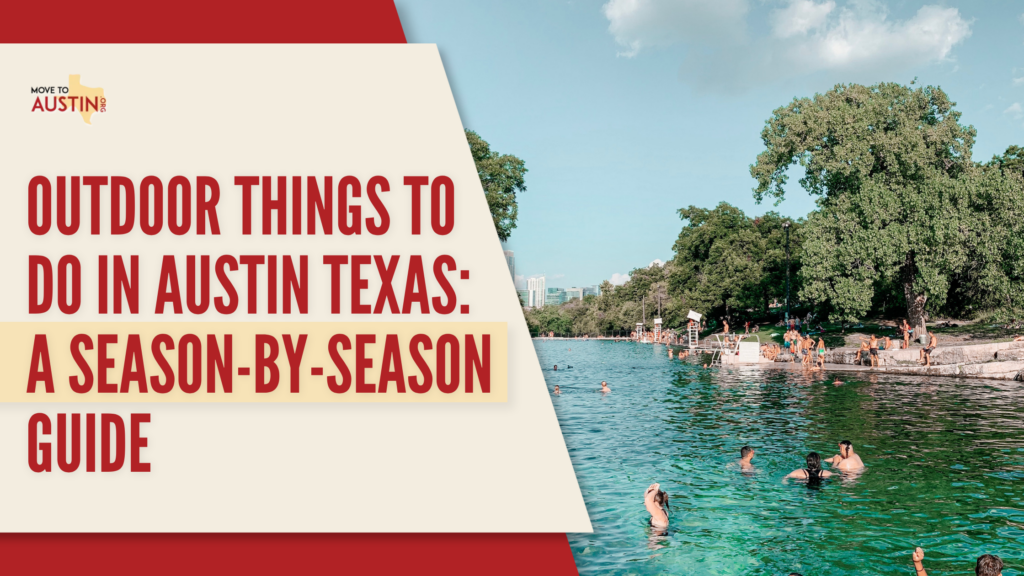
Barton Springs Pool opens for the season in earnest by late March. The pool is fed by natural springs and stays at 68°F year-round, which means spring mornings are bracingly cold in the best way — a sharp contrast to a warm afternoon. Lap swimmers claim early slots; families and sunbathers take over by noon.
Lady Bird Lake is at its most scenic in spring. Kayak and paddleboard rentals along the Congress Avenue waterfront and the Rowing Dock on the west side are easy to book, and the water is calm enough for beginners. The 10-mile hike-and-bike trail ringing the lake draws cyclists, joggers, and dog walkers in equal measure.
| Spring Activity | Best Location | Peak Window |
|---|---|---|
| Wildflower drives | Willow City Loop, Hwy 290 corridor | Late March to mid-April |
| Greenbelt hiking | Barton Creek Greenbelt | March through May |
| Paddleboarding | Lady Bird Lake | April through May |
| Cold-water swimming | Barton Springs Pool | March through May |
| Trail cycling | Lady Bird Lake loop | March through May |
Summer: Water Is the Strategy
June Through August Means Beating the Heat Deliberately
Austin summers are not subtle. Highs regularly exceed 100°F from late June through August, and the humidity, while lower than Houston’s, still matters. The locals who thrive outdoors in summer are the ones who shift their schedule and their activity type — not the ones who push through midday heat on exposed trails.
The outdoor things to do in Austin Texas that make summer genuinely enjoyable are almost all water-based. Lake Travis is the crown jewel: 65 miles of shoreline, consistent depth for swimming and wakeboarding, and multiple public parks for access. Hippie Hollow (clothing-optional) and Mansfield Dam Park are two of the most popular entry points.
Lake Austin, the narrower, calmer stretch of water closer to town, is better suited to paddleboarding and kayaking. It draws a more relaxed crowd than the open-water energy of Lake Travis and offers several restaurant docks where you can pull up by boat or paddleboard. The West Austin corridor borders much of this waterway, making it especially convenient for residents in that part of the metro.
Summer Trail Strategy: Go Early or Stay Home
If you’re committed to trails in summer, the window is narrow: 6:00 to 8:30 a.m. before the heat builds. The Barton Creek Greenbelt trails that run alongside the creek offer shade and occasional swimming holes, which makes them more manageable than exposed ridge routes. Pedernales Falls State Park, about 45 minutes west, has both shade and spring-fed pools for a rewarding day trip.
Evening trail use is possible after 7:00 p.m. in June and July when the sun drops. The Lady Bird Lake hike-and-bike loop stays busy until dark on weekday evenings — it’s one of the most consistent parts of an Austin fitness routine even in the hottest months, largely because the lake breeze makes a measurable difference.
Fall: The Season Locals Look Forward to Most
September Through November Reopens the Trail System
Fall is when Austin’s outdoor community seems to exhale. The first genuinely comfortable morning in September — usually somewhere around the 15th to 25th — is a cultural event. People who spent August inside suddenly reappear on the trails, at the parks, and on the water. The shift is noticeable within a week.
October and early November are the most balanced months on the outdoor calendar: daytime highs between 70°F and 82°F, low humidity, and trails that have softened from occasional early rains. This is when the Austin trail system gets its heaviest recreational use, and for good reason.
The Emma Long Metropolitan Park on the northwest edge of the city is worth discovering in fall. It offers both waterfront camping on Lake Austin and a trail network that stays shaded — a combination that’s hard to find this close to a major city. Barton Creek Greenbelt, which can feel crowded in spring, is more manageable on fall weekday mornings.
Fall Cycling and Open Water
Road cycling and mountain biking both reach peak conditions in October. The Veloway, a dedicated 3.1-mile paved loop in Slaughter Creek Metro Park in South Austin, is a reliable spot for cyclists who want a car-free route with no trail hazards. For mountain biking, the Brushy Creek Regional Trail system in the northern suburbs delivers varied terrain and good elevation change.
Lake Travis stays warm enough for comfortable swimming through late October, and boat traffic drops significantly after Labor Day. If you want the lake without the summer crowds, early fall is the most underrated window on the entire calendar. Paddleboard rentals remain available at most launch points through the end of October.
| Fall Activity | Best Location | Peak Window |
|---|---|---|
| Trail hiking | Barton Creek Greenbelt, Emma Long | October to November |
| Road and trail cycling | Veloway, Brushy Creek Regional Trail | October to November |
| Open-water swimming | Lake Travis | September to late October |
| Hill Country day trips | Pedernales Falls, Enchanted Rock | October to November |
| Paddleboarding | Lady Bird Lake, Lake Austin | September to October |
Winter: Quiet Parks and Mild-Weather Advantages
December Through February Is Underrated Outdoor Time
Austin’s winters are mild enough that outdoor activity doesn’t stop — it just thins out. Average December and January highs land between 58°F and 62°F, with occasional cold snaps that push into the 30s for a day or two before rebounding. Snow is rare, and extended freezes are infrequent, though not impossible.
The practical advantage of winter outdoor time in Austin is crowd size. The same trails that fill up on a Saturday in October are often nearly empty on a clear January morning. Barton Springs Pool operates year-round, and the 68°F water temperature actually feels warmer relative to the cool air than it does in summer — a counterintuitive but reliable phenomenon.
According to Austin’s official visitor and convention bureau, bat watching at the Congress Avenue Bridge is one of Austin’s signature outdoor experiences — and while the colony departs in late October and returns in March, the bridge itself and the surrounding Waller Creek area offer pleasant winter walks when temperatures cooperate.
Hill Country Is Best Explored in Winter
Enchanted Rock State Natural Area, about 90 minutes northwest of Austin, is genuinely more enjoyable in winter than in any other season. The granite dome hike is exposed and can feel punishing in summer heat; in January and February, it’s bracingly pleasant. Reservations are still recommended on weekends, but availability is far better than spring or fall.
Families who’ve relocated and are adjusting to the Central Texas school calendar will find that winter break and MLK weekend offer useful windows for longer day trips to Hill Country parks without competing with the full spring tourist wave.
Where You Live Shapes Your Outdoor Routine
Austin’s green spaces aren’t evenly distributed, and the neighborhood you choose has a real effect on how easily outdoor activities fit into your daily life. This is one of the more practical considerations for relocators who prioritize an active lifestyle.
South Austin is the natural home base for Barton Springs Pool, Zilker Park, and the Barton Creek Greenbelt. Residents here can walk or bike to the city’s most-used green spaces without getting in a car. The trade-off is that home prices in close-in South Austin have reflected that access for years.
West Austin sits adjacent to Lake Austin, Emma Long Metropolitan Park, and the Balcones Canyonlands corridor — a quieter, more rugged outdoor experience than the Zilker Park scene. It’s the choice for residents who want trail access without the central-city crowds. The Hill Country feels closer, and many West Austin neighborhoods have direct trail connectivity.
Further north, Round Rock offers its own outdoor infrastructure: the Brushy Creek Regional Trail system covers more than 30 miles of connected paths through the suburb, and Old Settlers Park provides athletic fields, disc golf, and open green space on a scale that’s harder to find inside Austin’s city limits. Families relocating to the northern suburbs find that the outdoor lifestyle is very much intact, just oriented differently.
Outdoor Things to Do in Austin Texas: A Month-by-Month Summary
| Month | Top Outdoor Focus | Key Locations |
|---|---|---|
| January | Hill Country hiking, quiet parks | Enchanted Rock, Barton Springs Pool |
| February | Trail walking, early bird watching | Lady Bird Lake loop, Emma Long |
| March | Wildflowers begin, Greenbelt opens up | Barton Creek Greenbelt, Hwy 290 |
| April | Peak wildflowers, paddleboarding season starts | Willow City Loop, Lady Bird Lake |
| May | Best all-around month for any activity | Any trail, any lake, any park |
| June | Shift to water; early-morning trails only | Lake Travis, Lake Austin |
| July | Full water-season mode | Barton Springs, Lake Travis |
| August | Water and shade only; avoid midday | Greenbelt pools, Lake Austin |
| September | First cooler mornings; trails reopen | Barton Creek Greenbelt, Lady Bird Lake |
| October | Peak fall trail and cycling conditions | Veloway, Brushy Creek, Pedernales Falls |
| November | Hill Country day trips, uncrowded parks | Enchanted Rock, McKinney Falls |
| December | Empty trails, mild days, quiet green spaces | Lady Bird Lake, Emma Long, Barton Springs |
Frequently Asked Questions About Austin Outdoor Activities
When is the best time of year for outdoor things to do in Austin Texas?
The spring months of April and May are consistently the best all-around window for outdoor activity in Austin. Temperatures are moderate, wildflowers are in bloom, and nearly every outdoor venue is accessible. October is the second-best month, particularly for hiking, cycling, and lake access without summer crowds.
Is Barton Springs Pool open year-round?
Yes. Barton Springs Pool operates year-round and maintains a consistent water temperature of approximately 68°F in every season. There is a small admission fee. In winter, the pool is open during scheduled hours but sees far fewer visitors, making it one of the most pleasant off-season outdoor experiences in the city.
Where can you paddleboard in Austin?
The most accessible paddleboarding locations are Lady Bird Lake and Lake Austin, both of which have multiple rental operators along the shore. Lady Bird Lake is centrally located and ideal for beginners. Lake Travis offers more open water for experienced paddlers but requires more planning to access. Peak paddleboard season runs April through October.
What outdoor activities can you do in Austin in the summer without overheating?
Summer outdoor activity in Austin is very manageable when you focus on water-based activities and early-morning timing. Swimming at Barton Springs Pool, kayaking on Lake Austin, and boating on Lake Travis are the most popular choices. If you prefer trails, start before 7:30 a.m. and stay close to the Barton Creek Greenbelt where canopy shade and creek access provide natural cooling.
Building an Outdoor Life Here Starts Before You Arrive
Austin’s outdoor lifestyle is one of the most consistent reasons people choose to relocate here and one of the most consistent reasons they stay. The green spaces are accessible, the network of trails is extensive, and the lakes are genuinely woven into daily life in a way that feels different from most cities of comparable size.
The neighborhood you choose shapes how that lifestyle plays out day-to-day. Proximity to the Greenbelt, a lake, or a connected trail network is worth factoring into your housing search alongside school districts, commute times, and price range. If you’d like a broader overview of what life looks like here before you commit, our free Austin relocation guide covers the full picture.
Austin rewards residents who arrive with a plan. Knowing when and where to be outside means more time actually enjoying it, and less time figuring it out after the fact.
Ready to Make Your Move to Austin?
The Relocation team knows the area’s neighborhoods inside and out. If you’re still researching or ready to tour homes, we can help you find the right fit.
Speak to a Relocation Specialist
Or start your home search and browse available listings across the Austin metro.
This post is for informational purposes only and does not constitute real estate, legal, or financial advice. Market conditions change. Please consult a licensed real estate professional before making any decisions.