
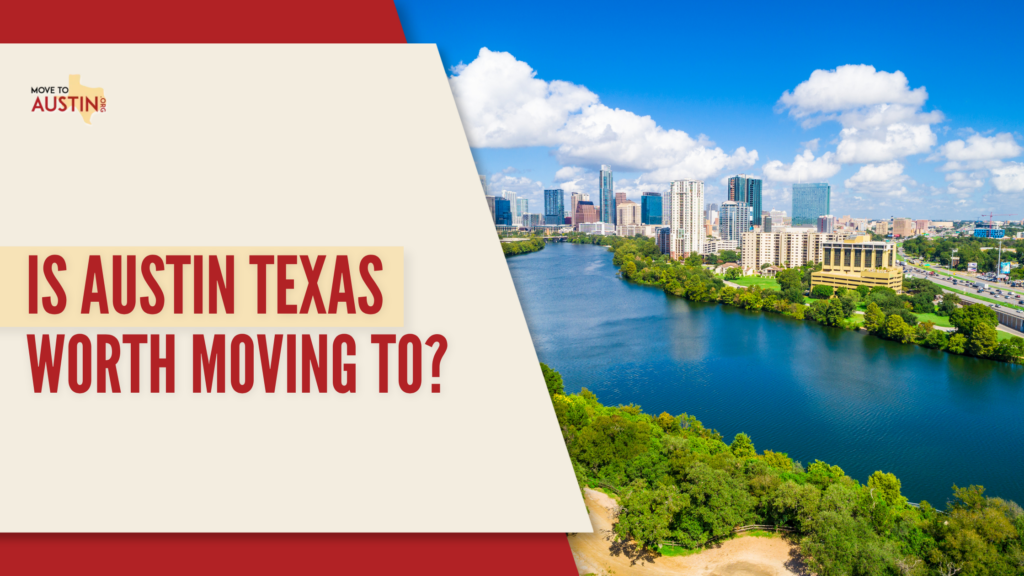
At the peak of the pandemic migration wave, Austin was absorbing an estimated 150 to 180 new residents every single day. Moving trucks were booked out for weeks. Homes were going under contract sight unseen. The city felt like it was being discovered in real time — and in many ways, it was.
Key Insights
- Austin absorbed an estimated 150 to 180 new residents per day at the height of the pandemic migration boom — that pace has now measurably slowed.
- The cooldown is actually good news for 2026 relocators: less competition, more inventory, and home prices well below their 2022 peak.
- Texas has no state income tax, and Austin’s job market continues to expand across tech, healthcare, and clean energy sectors.
- Common complaints from people leaving Austin — heat, traffic, and cost — are real trade-offs, but they’re manageable with the right neighborhood and budget planning.
- Surrounding suburbs like Round Rock, Cedar Park, and Pflugerville offer strong schools, lower price points, and shorter commutes than most assume.
- 2026 is shaping up as a more intentional, less reactive time to relocate — one that rewards buyers who do their homework rather than those who simply moved fast.
That era is over. Domestic migration into Austin has slowed noticeably since 2022, and the people leaving are vocal about why: summer heat, traffic congestion, and a cost of living that shot up faster than anyone expected. Online forums are full of their warnings.
But here’s what those posts tend to leave out. The same slowdown that’s prompting concern is also creating a window that 2021 arrivals never had: more inventory, more negotiating room, and a city that has matured enough to absorb growth without completely losing its identity. If you’re asking whether Austin Texas is worth moving to in 2026, the honest answer is more nuanced than either the boosters or the skeptics will tell you.
This post looks at both sides — the legitimate concerns and the concrete reasons the data still points toward Austin as one of the most attractive relocation destinations in the country.
Table of Contents
What the “Austin Exodus” Stories Actually Show
The narrative of people fleeing Austin is real, but it’s worth reading carefully. Most of the high-profile complaints come from one of two groups: people who moved during the 2021 to 2022 frenzy and found the reality didn’t match the hype, and longtime residents who watched their city change faster than they were comfortable with.
Both perspectives are valid. Neither one tells the whole story for a relocator evaluating Austin today.
The Complaints Are Specific — and Largely Predictable
The most consistent criticisms of Austin living cluster around four themes: summer heat, traffic, property taxes, and the perception that the city’s soul has been diluted by growth. These aren’t invented grievances. Austin summers are genuinely intense, with triple-digit temperatures stretching from June through September most years.
Traffic on I-35 and MoPac is a real daily friction point, especially for anyone commuting from the northern suburbs into downtown. And property taxes in Texas run higher than the national average, which surprises people who moved primarily for the no-income-tax benefit.
What the complaints rarely address is whether these trade-offs are worse in Austin than in the cities people are coming from. For someone leaving Chicago winters or Miami’s hurricane insurance costs, the calculus tends to look very different on a spreadsheet than it does in a Reddit thread.
The Slowdown Is Not a Collapse
Domestic migration slowing down is not the same as people avoiding Austin. The metro area continues to grow. The Austin metro’s population has crossed 2.3 million, and major employers keep arriving and expanding. What’s changed is the speed and the mood — which, for a relocator making a deliberate, long-term decision, is actually a more comfortable environment to move into.
The froth has come off. That’s a different thing entirely from the market falling apart.
Is Austin Texas Worth Moving To: The Case for 2026
The same conditions that are driving cautionary headlines are, from a relocation planning perspective, a set of genuine advantages. Here’s what the data supports.
Home Prices Have Pulled Back From Peak Levels
Austin’s housing market peaked in early to mid 2022. Since then, home prices across the Austin metro have corrected meaningfully. Median prices are down roughly 15 to 20 percent from their peak in many submarkets, and inventory has expanded substantially compared to the near-zero supply of the pandemic era.
That means a buyer arriving in 2026 is shopping in a market with actual choices — the ability to negotiate, conduct inspections, and take time to make a sound decision. That was simply not possible in 2021 or 2022.
According to Zillow, Austin metro home values have stabilized after their correction, with the median hovering in the mid-$400,000 range for the broader metro area. That’s still meaningful money, but it’s a very different entry point than the $550,000-plus peak.
The Job Market Remains One of Austin’s Core Strengths
Austin’s economic foundation is not built on hype. Apple, Tesla, Samsung, Dell, Oracle, and a growing cluster of defense and clean energy companies have all made significant commitments to the metro. According to the Bureau of Labor Statistics, the Austin metro area has consistently maintained an unemployment rate below the national average, and professional and business services employment has continued expanding even as the national tech sector went through layoff cycles.
Healthcare is also a major and growing employment sector — one that the 2021 to 2022 narrative largely ignored because it wasn’t as flashy as tech. For medical professionals considering Austin, the opportunity set has expanded significantly with hospital system expansions across the metro.
The no-state-income-tax advantage compounds over time in a way that’s easy to underestimate. For someone earning $120,000 a year who moves from California or New York, the effective annual tax savings can run $8,000 to $15,000 or more, depending on the origin state’s rate. Over five years, that’s a meaningful number.
The Infrastructure Investment Is Finally Catching Up
One of the loudest complaints from the 2020 to 2022 wave was that Austin’s infrastructure wasn’t built to handle rapid growth. That was true, and it was a fair criticism. But the city and surrounding counties have been investing heavily in road expansions, utility upgrades, and transit options since then.
Project Connect, Austin’s light rail and rapid transit program, continues to advance. New highway expansion projects on major corridors are in progress. These improvements don’t fix today’s traffic overnight, but they represent a city that is actively building toward the population it already has.
What the Right Neighborhood Changes About the Equation
A significant portion of the “Austin isn’t worth it” complaints come from people who landed in the wrong neighborhood for their lifestyle and budget. Location within the Austin metro matters enormously — both for day-to-day quality of life and for long-term financial positioning.
Here’s a practical look at four areas that relocators are actively choosing in 2026, with the trade-offs laid out clearly.
| Area | Typical Home Price | School District | Best Fit For |
|---|---|---|---|
| Round Rock | $390,000 to $480,000 | Round Rock ISD | Families, value seekers, Dell/tech corridor commuters |
| Cedar Park | $420,000 to $520,000 | Leander ISD | Families wanting top-rated schools and suburban amenities |
| South Austin | $450,000 to $600,000 | Austin ISD | Culture seekers, proximity to downtown, walkable lifestyle |
| Pflugerville | $340,000 to $420,000 | Pflugerville ISD | Budget-conscious buyers, first-time relocators, I-35 corridor access |
Round Rock: Value and Stability
Round Rock sits about 20 miles north of downtown Austin and has built a reputation as one of the most family-friendly communities in the metro. Round Rock ISD consistently earns strong ratings, and the area’s proximity to the Dell Technologies campus and the tech corridor along US-183 makes it a natural fit for professionals in that sector.
Home prices here have stabilized in the $390,000 to $480,000 range for a well-maintained three- to four-bedroom home. That’s a meaningful discount from central Austin, and the schools and parks infrastructure is genuinely impressive for the price point.
Cedar Park and Leander ISD: For Families Prioritizing Schools
Cedar Park, immediately north of Round Rock, feeds into Leander ISD — one of the most consistently high-performing school districts in the state. For families relocating to Austin with children, this combination of suburban livability and school quality is a primary draw.
The area has strong new construction availability, which gives buyers the option to build rather than compete for existing inventory. If that question is on your mind, our breakdown of building vs. buying in Austin is worth reading before you commit to either path.
South Austin: Culture and Community
South Austin is where Austin’s original personality has been most preserved. The music venues, food trucks, independent coffee shops, and hiking trails along the Barton Creek Greenbelt are all part of what makes this corridor feel distinct from the more suburban character of the northern suburbs.
It comes at a premium. Expect to pay $450,000 to $600,000 for a house in established South Austin neighborhoods, and more for anything close to South Congress. But for people who moved to Austin specifically for the culture — not just the tax environment — this is the area that delivers on that promise most authentically.
Addressing the Real Trade-Offs Honestly
Any post making a case for Austin that glosses over the downsides isn’t doing you any favors. Here are the legitimate friction points, along with how most relocators actually navigate them.
- Summer heat. This is not overstated. Austin summers are long and hot, and climate trends have made them hotter. If you have a medical condition aggravated by heat, or simply hate being outdoors in high temperatures, that’s a real quality-of-life factor to weigh. Most residents adapt by shifting outdoor activity to early mornings and late evenings from June through September.
- Property taxes. Texas has no state income tax, but property taxes average around 1.7 to 2.1 percent of appraised value annually — one of the higher rates in the country. Budget for this carefully. On a $450,000 home, that’s $7,650 to $9,450 per year in property taxes alone.
- Traffic. The I-35 corridor is genuinely congested during peak hours, and that’s unlikely to change quickly. Remote and hybrid work arrangements are the most effective mitigation. If your role requires five days per week in a downtown office, factor commute time and cost into your neighborhood decision carefully.
- Water and grid concerns. The 2021 winter storm brought Texas’s power grid into sharp public focus. Utility reliability has improved, and many newer homes include backup systems, but this remains a real infrastructure concern worth understanding before you move.
None of these are reasons to categorically rule Austin out. But they are reasons to go in with clear expectations and a thoughtful neighborhood and housing strategy — not just a vague enthusiasm for the idea of Austin.
Our detailed pros and cons breakdown covers these trade-offs in more depth if you want to work through them systematically.
Who Is Still Moving to Austin in 2026 — and Why
The relocators arriving in 2026 tend to be more deliberate than the 2021 wave. They’ve researched longer, compared more cities, and come with a clearer sense of what they want from the move. That’s a healthier starting point for building a long-term life in a new place.
The cities sending the most movers to Austin continue to include Los Angeles, Chicago, New York, and Miami — places where the tax burden, cost of living, and in some cases the political environment have pushed residents to reassess. For someone leaving California, the combined financial impact of no state income tax plus lower housing costs (even at today’s Austin prices) often covers a substantial portion of moving expenses within the first year.
If you’re coming from Chicago specifically, our Chicago to Austin relocation guide breaks down the cost-of-living comparison in detail. And for Miami relocators, the Miami to Austin guide addresses the specific trade-offs and similarities between those two markets.
Frequently Asked Questions About Moving to Austin
Is Austin Texas worth moving to if home prices are still high?
It depends on where you’re coming from. If you’re relocating from coastal markets like San Francisco, New York, or Miami, Austin’s current prices — with a metro median around $450,000 to $480,000 — often represent a genuine discount, especially when state income tax savings are factored in. If you’re coming from a lower-cost Midwest market, the math is tighter and renting first to evaluate neighborhoods is a smarter initial strategy.
Why are people leaving Austin, and does that signal a problem?
Most documented outmigration involves people moving to smaller Texas cities like San Antonio or the Hill Country, not leaving Texas entirely. The reasons are mostly cost-driven: people priced out of Austin proper are finding value in surrounding communities. That’s a sign of a metro spreading outward, not collapsing. Net migration into the Austin metro as a whole has remained positive.
What is the biggest surprise for people who move to Austin?
The most common surprise is the property tax bill. Many relocators budget carefully for their mortgage but underestimate the annual tax liability on Texas real estate. The second most common surprise is how manageable the trade-offs feel after six to twelve months of actually living there — the heat, the traffic, and the culture shock tend to settle into a livable routine faster than newcomers expect.
Is 2026 a good time to buy a home in Austin?
The market today offers more inventory, more negotiating room, and a less frenzied pace than 2021 to 2022 — which makes it a more rational environment for a buyer who has done their homework. Whether or not it’s the “right” time depends on your personal financial readiness, timeline, and target neighborhood. Start with our home-buying guide for Austin relocators for a grounded framework.
The Bottom Line on Austin in 2026
The people who left Austin with complaints weren’t wrong about the specific things they described. The city grew faster than its infrastructure, home prices ran ahead of incomes for a period, and some of the cultural texture that made Austin distinctive got buried under construction cranes and chain restaurants.
But most of those friction points have eased. The market has corrected. The frenzy has passed. And the core fundamentals — the job market, the tax environment, the outdoor lifestyle, and the cultural energy — remain intact in a way that still makes Austin one of the most compelling relocation destinations in the country for the right type of mover.
The relocators who will thrive here in 2026 are the ones who arrive with realistic expectations, a solid financial plan, and a clear sense of which part of the metro fits their life. That’s a more intentional kind of move than what the pandemic wave produced — and it’s likely to produce better long-term outcomes as a result.
If you’re in the research phase, our free Austin relocation guide is a good starting point. And if you’re ready to get specific about neighborhoods, timelines, and budgets, our team is here to help you work through it.
Ready to Make Your Move to Austin?
Our relocation team knows the Austin metro’s neighborhoods, submarkets, and trade-offs inside and out. If you’re still researching or ready to tour homes, we can help you find the right fit for your timeline and budget.
Speak to a Relocation Specialist
Or start your home search and browse available listings across the Austin metro.
This post is for informational purposes only and does not constitute real estate, legal, or financial advice. Market conditions change. Please consult a licensed real estate professional before making any decisions.