
Severe weather can strike at any time, and Austin, Texas, is no exception. With the potential for tornadoes, floods, and other extreme weather events, it’s crucial to be prepared. This guide provides comprehensive steps to ensure safety and readiness for any severe weather scenario in Austin.
Table of Contents
Understanding Austin’s Severe Weather Risks
Austin is prone to a variety of severe weather conditions due to its geographical location. From tornadoes to flash floods, understanding these risks is the first step in preparation. The city experiences an array of weather patterns that can significantly impact daily life and safety.
- Tornadoes: Central Texas is part of Tornado Alley, making tornadoes a significant threat.
- Floods: Austin experiences frequent flash floods, especially during heavy rain events.
- Extreme Heat: The region often faces prolonged periods of extreme heat during summer.
Proper awareness of these weather patterns can help residents take proactive measures to protect their families and properties. Understanding the unique challenges each type of severe weather presents allows for more tailored preparation and response strategies.
Preparing for Tornadoes
Tornadoes can cause widespread devastation in a matter of minutes. Some of the most common places in Texas that are hit by Tornadoes are Harris County in Houston, Hale County north of Lubbock, west of San Antonio, and the southeast of San Angelo. Preparation involves both immediate actions and long-term planning. Having a solid plan in place can make a critical difference when a tornado strikes.
Steps to Prepare for Tornadoes
- Create a Safe Room: Identify a small, windowless room on the lowest level of your home.
- Emergency Kit: Stock up on essential supplies like water, non-perishable food, medications, and first aid items.
- Communication Plan: Establish a family communication plan to stay in touch during emergencies.
Ensuring a designated safe room equipped with necessary supplies can significantly increase survival chances during a tornado. It’s also vital to stay informed about tornado warnings and watches, which can provide precious time to seek shelter.
Flood Preparedness
Floods are one of Austin’s most common and dangerous natural disasters. Proper flood preparation can mitigate damage and ensure safety. Flash floods, in particular, can occur with little warning, making it essential to have a proactive plan.
Steps to Prepare for Floods
- Know Your Flood Zone: Check if your home is in a flood-prone area.
- Install Flood Barriers: Use sandbags and flood barriers to protect your property.
- Elevate Utilities: Raise electrical appliances and utilities above potential flood levels.
Understanding your flood risk and taking preventive measures can help reduce the impact of flooding on your home and family. Additionally, having a plan for evacuation and knowing the safest routes can save lives during a flood event.
Emergency Kits: Essentials for Any Disaster
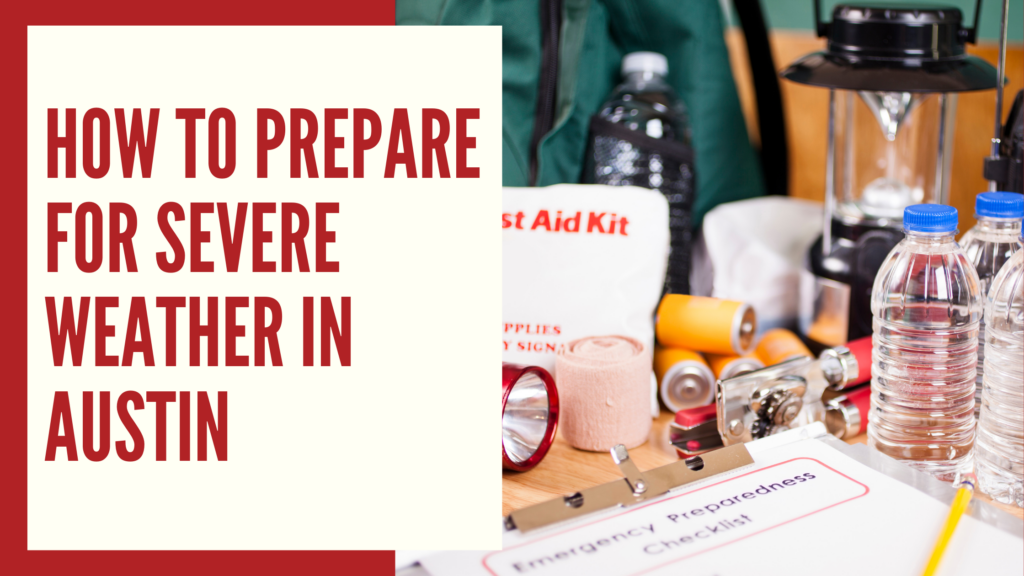
Having a well-prepared emergency kit is crucial for any severe weather situation. This kit should be tailored to meet the needs of your household, ensuring everyone has what they need to survive the initial phase of a disaster.
Items to Include in Your Emergency Kit
- Water: At least one gallon per person per day for three days.
- Food: A three-day supply of non-perishable food.
- Medications: A week’s supply of prescription and over-the-counter medications.
- First Aid Supplies: Bandages, antiseptics, scissors, and other first aid essentials.
- Tools: Multi-purpose tool, flashlight, extra batteries.
- Important Documents: Copies of identification, insurance policies, and bank account records.
Having an emergency kit readily available ensures that you can sustain yourself and your family during the initial phase of a disaster. Regularly checking and updating the kit is essential to keep all items current and functional.
Creating an Emergency Plan
An emergency plan is essential for quick and effective action during severe weather events. This plan should cover all aspects of safety and communication, making sure every family member knows their role and responsibilities.
Components of an Effective Emergency Plan
- Evacuation Routes: Identify multiple evacuation routes in case one is blocked.
- Meeting Points: Designate safe meeting points for family members.
- Contact Information: List emergency contacts, including family, friends, and local authorities.
- Pet Plan: Ensure your plan includes provisions for pets.
Regularly practicing your emergency plan with all family members can help ensure that everyone knows what to do during a real emergency. Familiarity with the plan increases confidence and reduces panic in stressful situations.
Staying Informed
Staying informed about weather conditions is critical for timely preparation and response. Utilize various sources to keep updated, as reliable information can make a significant difference in how quickly you can react to severe weather.
Reliable Sources for Weather Updates
- Local News Stations: Regularly tune in to local TV and radio stations.
- Weather Apps: Use weather apps for real-time updates and alerts.
- NOAA Weather Radio: Invest in a NOAA Weather Radio for continuous weather information.
Staying informed helps you make quick decisions, reducing the risk of being caught off guard by severe weather. Regularly checking multiple sources ensures you receive accurate and timely information.
Protecting Your Home
Taking steps to protect your home from severe weather can minimize damage and reduce repair costs. Simple but effective measures can make a substantial difference in how well your property withstands extreme conditions.
Home Protection Tips
- Secure Outdoor Items: Bring in or secure outdoor furniture and other items.
- Reinforce Windows and Doors: Use storm shutters or plywood to protect windows and doors.
- Trim Trees and Shrubs: Keep trees and shrubs trimmed to prevent branches from causing damage.
Proactively reinforcing your home can help withstand the impact of severe weather, protecting both your property and loved ones. Regular maintenance and inspections can identify and address potential vulnerabilities.
Community Resources and Support
Austin offers various resources and support systems to help residents prepare for and respond to severe weather events. Utilizing these resources can provide additional support and information, enhancing your preparedness efforts.
Community Resources
- Austin Emergency Management: Provides guidelines and resources for disaster preparedness.
- Local Shelters: Information on shelters available during emergencies.
- Community Groups: Join local community groups for support and information sharing.
Utilizing community resources can provide additional support and information, enhancing your preparedness efforts. Engaging with local groups can also offer emotional support and practical advice during challenging times.
Preparation for Natural Disasters
Preparing for severe weather in Austin involves understanding the risks, creating emergency plans, and taking proactive measures to protect yourself and your home. By staying informed and utilizing community resources, you can ensure safety and resilience in the face of tornadoes, floods, and other extreme weather events.
For more detailed information and resources on severe weather preparedness, visit the City of Austin’s official severe weather page and stay updated with the latest local news.