
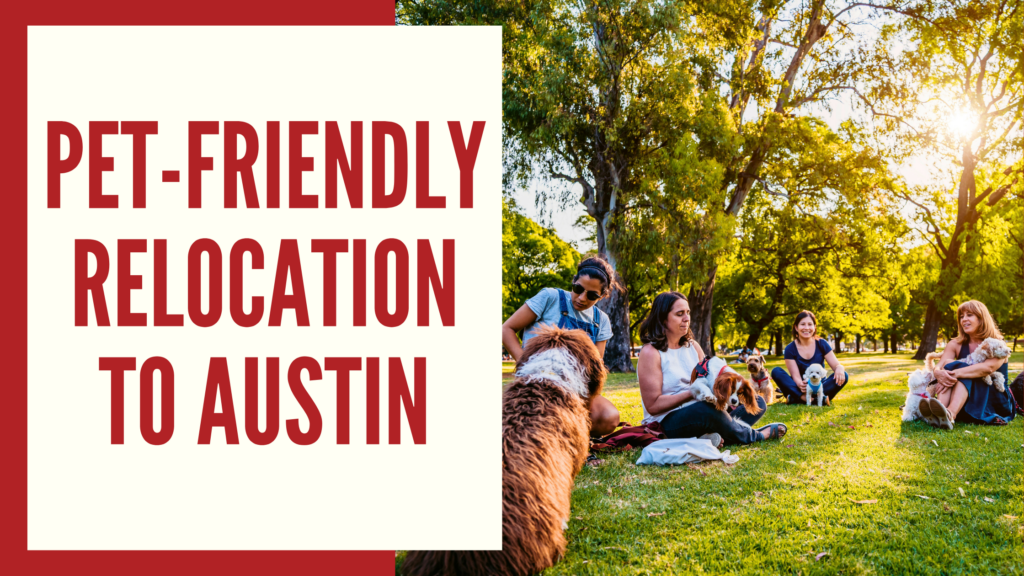
Austin has built a well-earned reputation as one of the most pet-friendly cities in the United States. That reputation is backed by real infrastructure: a network of off-leash dog parks, miles of pet-accessible trails, a strong veterinary community, and a general culture that welcomes pets in outdoor spaces, patios, and community events. If you are moving to Austin with a dog, cat, or other pet, you are moving to a city that has genuinely thought about this.
Austin Pet Relocation: Quick Snapshot
- Off-leash parks: 20-plus designated off-leash areas across Austin
- Pet licensing: Required for dogs and cats within Austin city limits
- Leash law: Pets must be leashed in all non-designated areas
- Rental pet fees: Most Austin rentals charge a pet deposit and monthly pet rent
- Vet access: Strong general and emergency vet presence across the metro
- Animal shelter: Austin Animal Center is a no-kill facility
That said, a pet-friendly relocation still requires preparation. Housing searches take longer when you have pets. Vet care needs to be lined up before you arrive. Local ordinances around leash laws and licensing have specific requirements. And not every neighborhood in Austin is equally well-suited to every type of pet owner.
This guide covers what you actually need to know before you move to Austin with a pet, from finding the right neighborhood to navigating rental pet policies to understanding local laws. The goal is to make your arrival as smooth as possible for you and your animal.
Table of Contents
Austin’s Dog Park and Trail Network
Austin’s park system is one of its genuine strengths for pet owners. The city maintains more than 20 designated off-leash areas, ranging from small neighborhood parks to expansive green spaces with water access. The variety means that most parts of the metro have at least one quality off-leash option within a short drive.
Top Off-Leash Parks in Austin
Zilker Park’s off-leash area along Barton Creek is one of the most popular in the city, offering open grass, creek access, and proximity to the Barton Springs Pool area. Norwood Estate Dog Park near East Austin is well-maintained and popular with urban pet owners in that corridor. The Onion Creek District Park in South Austin includes a large off-leash section with shade and open terrain. According to Austin Parks and Recreation, the city has continued to expand its off-leash inventory as the population has grown.
Suburban communities around Austin also maintain their own off-leash parks. Round Rock, Cedar Park, and Pflugerville all have dedicated dog parks with separate areas for small and large breeds, water stations, and seating for owners.
Pet-Friendly Trails and Green Spaces
The Lady Bird Lake hike and bike trail is one of Austin’s most beloved public spaces, and leashed dogs are welcome throughout its 10-mile loop. The trail runs along both shores of Lady Bird Lake and connects multiple neighborhoods, making it a practical daily route for dog owners who live nearby. The Barton Creek Greenbelt, a 12-mile natural limestone canyon system in Southwest Austin, also allows leashed dogs and provides creek swimming during higher water seasons. For an overview of outdoor recreation in the city, the things to do in Austin page covers the full landscape of parks, trails, and green spaces.
Finding Pet-Friendly Housing in Austin
Housing is where pet owners encounter the most friction during a relocation. Austin’s rental and purchase markets both have nuances that are worth understanding before you begin your search.
Renting with Pets: Deposits, Fees, and What to Expect
Most Austin rental properties accept pets, but the financial terms vary. A typical Austin rental arrangement for a pet owner includes a non-refundable pet fee of $200 to $500 per pet and a monthly pet rent of $25 to $75 per animal. Some properties charge a refundable pet deposit instead of or in addition to the fee. Larger apartment communities tend to be more standardized in their pet policies, while individual landlords vary more widely.
Weight and breed restrictions are common in multi-family properties. Many complexes cap dogs at 50 to 75 pounds and restrict breeds commonly flagged by insurance underwriters, including pit bulls, Rottweilers, Dobermans, and German Shepherds. If you have a large dog or a restricted breed, it is worth confirming the policy explicitly before applying for a unit. Single-family rental homes managed by individual owners tend to be more flexible on both weight and breed.
Buying a Home with Pets in Mind
For buyers, the primary considerations are yard size, proximity to parks or trails, and HOA restrictions. A fenced backyard is a significant quality-of-life feature for dog owners, and in many Austin-area neighborhoods it is a standard feature of single-family homes. Proximity to off-leash parks or trail systems is worth prioritizing during your neighborhood research. Working with a buyer’s agent experienced in pet owner priorities, such as the team at Spyglass Realty, can help you filter your search around the features that matter most. For a broader overview of the purchase process, the buying a home in Austin guide is a useful resource.
HOA Rules and Breed Restrictions to Watch For
Many Austin-area communities, particularly newer suburban developments, are governed by homeowner associations. HOA pet policies vary widely. Some have no restrictions beyond local ordinance. Others limit the number of pets per household, impose weight limits, or restrict specific breeds. Before making an offer on a home in an HOA community, request the CC&Rs and pet addendum and review them carefully. This step is easy to overlook in a fast-moving purchase process and can create complications after closing.
Free Resource
The Free Austin Relocation Guide
Everything you need to plan your move, from neighborhoods and schools to cost of living and what to expect when you arrive. Download it free and keep it as your reference throughout the process.
Veterinary Care and Emergency Services in Austin
Austin’s veterinary community is well-developed. The metro supports a large number of general practice clinics across most neighborhoods, as well as specialty and emergency facilities that serve the entire region.
Finding a Vet Before You Arrive
Establishing care with a veterinarian before you arrive, or within the first few weeks of moving, is strongly recommended. Many popular Austin veterinary practices have waiting lists for new clients, particularly in central and South Austin neighborhoods. Starting your search early, requesting your pet’s medical records from your current vet, and having vaccination documentation on hand will make the onboarding process with a new practice straightforward. The American Veterinary Medical Association maintains a directory that can help you identify licensed practices in your target neighborhood before your move date.
Emergency and Specialty Vet Clinics in Austin
Austin has multiple 24-hour emergency veterinary facilities distributed across the metro, including options in North Austin, South Austin, and the Round Rock area. Specialty services, including oncology, cardiology, and orthopedic surgery, are available through referral-based specialty practices. Texas A&M’s veterinary program, located in College Station about 100 miles east of Austin, provides a high-level referral option for complex cases. For most standard and urgent care needs, you will not need to travel far from any part of the Austin metro.
Austin’s Local Pet Laws and Licensing
Austin has clear local ordinances governing pet ownership, and understanding them before you arrive avoids any friction with the city after you settle in.
Leash Laws and Off-Leash Zones
Austin’s leash law requires that dogs be on a leash no longer than six feet in all public areas that are not designated off-leash zones. This applies to sidewalks, parks, trails, and any public space outside of designated areas. The designated off-leash areas maintained by the city are clearly marked and well-distributed. According to the City of Austin, violations can result in citations, so knowing which spaces are off-leash designated before letting your dog run free is worth confirming.
Pet Licensing Requirements in Austin
Dogs and cats four months of age and older must be licensed with the City of Austin. Licensing requires proof of current rabies vaccination and a small annual fee. Licenses are available through Austin Animal Services and can be completed online. If your pet is microchipped, that information is linked to your license record, which helps with recovery in the event your pet is lost. The licensing process is straightforward and takes about 15 minutes once you have your vaccination documentation in hand.
Best Neighborhoods in Austin for Pet Owners
Some parts of Austin are meaningfully better suited to pet owners than others, based on proximity to parks, walkability, and the density of pet-focused services like groomers, doggy daycare, and boarding facilities. The neighborhoods in Austin guide provides a broader overview of the metro’s distinct areas, and the pet-specific considerations below can help you prioritize.
South Austin and the Greenbelt
South Austin is widely regarded as one of the best areas in the city for dog owners. Barton Creek Greenbelt access, the Zilker Park off-leash area, and the general pedestrian culture of the South Congress corridor make it an easy place to own a dog. Homes in South Austin typically include yards, and the neighborhood’s density of pet services, including grooming, boarding, and daycare, is high.
North Austin Suburbs with Dog-Friendly Amenities
Round Rock, Cedar Park, and Leander have invested in community park infrastructure that includes quality off-leash areas, walking paths, and pet-friendly community events. These suburbs are also well-served by veterinary practices, and the lower density means most homes include private yards. For families with pets who prioritize space and school quality, these communities are a natural fit.
East Austin for Urban Pet Owners
East Austin’s urban density means smaller yards or no yard at all in many cases, but the area compensates with walkable access to the Lady Bird Lake trail, Norwood Estate Dog Park, and a high concentration of dog-friendly patios and businesses. Pet owners in East Austin tend to be highly engaged in the off-leash park and trail system, making up for yard limitations with daily trail and park time. It is a strong option for active dog owners who want city energy without sacrificing pet quality of life.
Frequently Asked Questions
Is Austin a good city for dogs?
Yes, Austin consistently ranks among the most dog-friendly cities in the country. The city maintains more than 20 off-leash parks, has extensive trail access that welcomes leashed dogs, and supports a strong community culture around pet ownership. The summer heat requires some adjustment, specifically shifting outdoor activity to early mornings and evenings from June through September, but the overall infrastructure and attitude toward dogs in Austin is genuinely strong.
What are the pet deposit rules for Austin rentals?
Most Austin rentals charge either a non-refundable pet fee, a refundable pet deposit, or both, plus monthly pet rent. Non-refundable fees typically range from $200 to $500 per pet. Monthly pet rent commonly runs $25 to $75 per animal. Policies vary by property, so always confirm the specific terms before signing. Weight and breed restrictions are common in multi-family buildings, and single-family rentals tend to offer more flexibility.
Are there breed restrictions in Austin Texas?
Austin does not have a citywide breed ban, but individual landlords, apartment communities, and HOAs may impose their own breed restrictions. Insurance underwriters also influence which breeds are accepted in rental and HOA settings. Commonly restricted breeds include pit bulls, Rottweilers, Dobermans, Chows, and German Shepherds, though this varies by property. If you have a dog of a commonly restricted breed, factor extra search time into your housing plan and prioritize single-family rentals or private homeownership where restrictions are less common.
What should I do first when I arrive in Austin with a pet?
The three immediate priorities are licensing, veterinary registration, and locating your nearest emergency vet. Austin requires dogs and cats to be licensed within the city limits, and the process is quick once you have current vaccination records. Registering with a local vet early is important because many practices have waitlists for new clients. Identifying your nearest 24-hour emergency facility before you need it is a small step that can save significant stress in an urgent situation.
Ready to Make Your Move?
Talk to a Move to Austin Relocation Specialist
Whether you are in early planning mode or ready to start your home search, our relocation specialists can help you find the right neighborhood and home setup for you and your pet. Reach out and get the process started.
Disclaimer: This article is for general educational purposes only and is not legal, tax, or financial advice. Every situation is different. Before making decisions about buying or selling a home, consult with your own real estate professional, lender, tax advisor, and other qualified professionals.